Sustainability & Circular Economy



Healthcare facilities depend on clean, safe, and hygienically processed textiles to support patient care and reduce the risk of healthcare-associated infections. From patient gowns and bed linens to surgical textiles and staff uniforms, every item processed through a healthcare laundry system plays a role in infection prevention and operational continuity.
As hospitals face increasing regulatory scrutiny and growing pressure to improve efficiency, understanding hospital laundry requirements has become more important than ever. Compliance with healthcare laundry standards, infection control protocols, and linen handling procedures is already a critical component of patient safety.
This article explores the key hospital laundry requirements in healthcare facilities, including compliance considerations, infection control best practices, healthcare laundry equipment selection, and workflow strategies that support both hygiene and operational efficiency.
Hospital laundries operate under stricter requirements than most commercial laundry environments due to the potential presence of infectious agents and contaminated textiles.
Healthcare facilities must ensure that their laundry operations support effective infection prevention and control while maintaining safe handling procedures for contaminated linen. At the same time, hospitals need to comply with healthcare regulations and standards, guarantee consistent textile quality and hygiene, maintain traceability throughout the process, and optimize operational efficiency to control costs and ensure continuity of service.
Whether laundry operations are managed on-premise or through hospital laundry services providers, facilities must implement systems and procedures that minimize cross-contamination risks while ensuring consistent hygiene outcomes.
Effective healthcare compliance depends on implementing documented procedures, staff training programs, and validated laundry processes that support infection prevention objectives while meeting regulatory requirements. At the same time, healthcare organizations are increasingly looking for ways to optimize laundry operations, improve productivity, reduce manual intervention, and ensure that hygiene and compliance requirements can be met efficiently and consistently.
Hospital linen management also plays a key role in maintaining operational continuity. Insufficient linen availability, poor inventory control, or inefficient processing workflows can negatively affect patient care and increase operating costs.
As a result, many healthcare facilities are investing in healthcare laundry solutions that improve hygiene, process control, and operational efficiency.
Healthcare laundry operations in the United States are influenced by recommendations and regulations from several organizations, including the Centers for Disease Control and Prevention (CDC), the Occupational Safety and Health Administration (OSHA), and accreditation bodies such as The Joint Commission. CDC laundry guidelines focus on the safe collection, transportation, processing, and storage of healthcare textiles, while OSHA laundry regulations aim to protect employees who may be exposed to contaminated materials during laundry operations.
Strong healthcare compliance programs help ensure these requirements are applied consistently through documented procedures, employee training, equipment validation, and infection prevention measures. By aligning operations with CDC and OSHA recommendations, healthcare facilities can strengthen compliance while supporting both employee safety and operational performance.
One of the most important hospital laundry requirements involves the safe handling of contaminated linen.
Healthcare laundry hygiene begins long before textiles enter the wash process. Collection, transport, sorting, and storage procedures all influence infection control outcomes.
Industry best practices recommend minimizing direct handling of soiled textiles and establishing clear physical separation between contaminated and clean areas. This helps reduce opportunities for cross-contamination throughout the laundry process.
A hygienic laundry process should include:
Many healthcare facilities are also implementing automated handling systems to reduce manual intervention and improve employee safety.
The goal is not simply to clean textiles but to support broader infection control laundry guidelines that help protect patients, staff, and visitors.
Among the most important pieces of healthcare laundry equipment are barrier washers.
A barrier washer is specifically designed to prevent cross-contamination by physically separating the soiled side of the laundry operation from the clean side. Textiles are loaded from one side of the machine and unloaded from the opposite side after processing, maintaining strict segregation between contaminated and hygienically clean areas.
This design supports healthcare laundry standards by reducing the risk of pathogens being transferred between processing stages.
Barrier washers are widely used in hospitals, long-term care facilities, rehabilitation centers and specialized medical laundries.
When integrated into a properly designed healthcare laundry system, barrier washers help facilities improve infection control, compliance, and operational reliability.
Beyond infection control, barrier washers can also deliver significant operational benefits. By supporting a clear separation between clean and soiled workflows, they help streamline laundry operations, reduce handling risks, improve process consistency, and facilitate compliance audits. For healthcare laundry managers, this often translates into greater operational efficiency, improved staff productivity, lower contamination-related risks, and more reliable linen availability across the facility.
For healthcare environments with larger processing volumes, tunnel washer systems may also be incorporated into highly automated workflows. These systems improve throughput while supporting consistent wash quality and process control.
The design of a healthcare laundry operation is just as important as the equipment itself.
Effective healthcare laundry systems rely on clearly defined workflows that support hygiene, productivity, and compliance. Industry best practices typically recommend maintaining a strict separation between dirty and clean zones throughout the facility.
Well-designed healthcare laundries often incorporate:
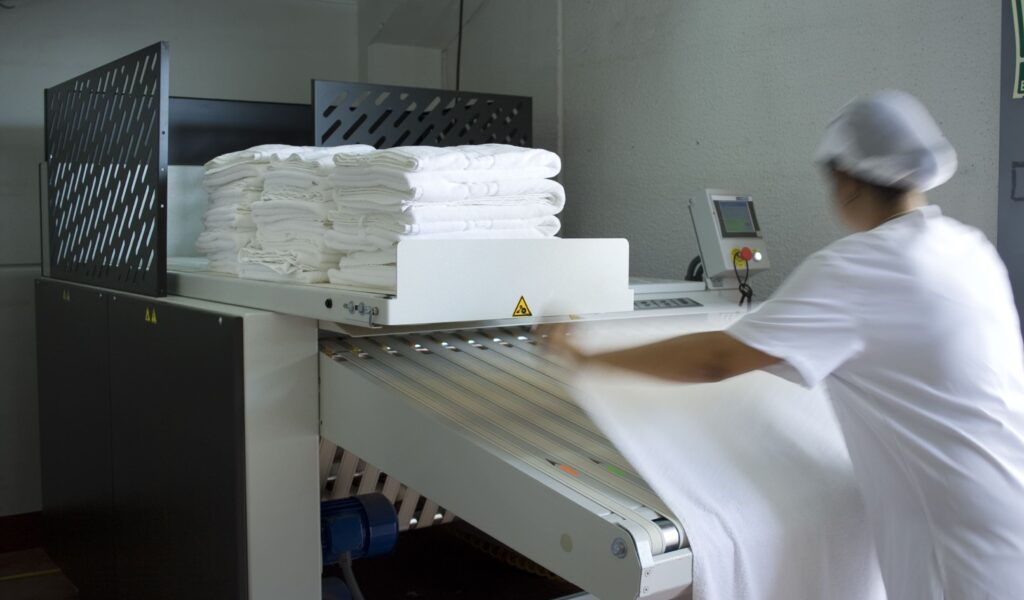
Automation is also becoming increasingly important. Modern healthcare laundry equipment can help reduce manual handling, improve ergonomics, and support safer working environments.
Advanced hospital laundry equipment can further support compliance and operational performance by improving process consistency, reducing manual intervention, and enhancing traceability throughout the laundry workflow.
Digital technologies further strengthen compliance by providing greater visibility into laundry operations. Real-time monitoring, production tracking, and process reporting help facilities document performance and identify opportunities for improvement.
These technologies allow healthcare organizations to move beyond simple textile processing and toward fully integrated healthcare laundry solutions.
Improving operational efficiency is one of the main drivers behind healthcare laundry modernization. Hospitals and healthcare facilities are under constant pressure to increase productivity, reduce costs, optimize resource utilization, and maintain uninterrupted linen availability. The most effective healthcare laundry systems achieve these goals while simultaneously strengthening compliance and infection control.
Facilities that invest in modern healthcare laundry equipment frequently achieve improvements in both infection control and operational performance. Automated workflows, advanced washer-extractors, barrier washers, tunnel washer systems, and digital management tools can help reduce labor requirements while supporting consistent hygiene outcomes.
At the same time, technologies that improve water efficiency, energy consumption, and chemical management contribute to lower operating costs without compromising hospital hygiene standards.
Many healthcare facilities are also adopting integrated healthcare laundry solutions that combine equipment, workflow design, process automation, and digital monitoring into a single operational strategy.
This holistic approach helps healthcare organizations strengthen compliance, reduce cross-contamination risks, and create safer working environments for employees. At the same time, it improves productivity, ensures consistent linen quality and availability, and supports broader sustainability objectives by optimizing resource consumption and operational performance.
As healthcare facilities continue to face increasing demands related to patient safety, workforce shortages, and operational efficiency, laundry operations are becoming an increasingly strategic part of healthcare infrastructure.
Healthcare laundry operations are far more than support services. They are critical components of infection prevention, patient safety, and regulatory compliance.
Understanding hospital laundry requirements involves more than selecting the right healthcare laundry equipment. It requires a comprehensive approach that combines healthcare compliance, infection control, workflow optimization, and hygienic process design.
By implementing best practices, following CDC laundry guidelines and OSHA requirements, and investing in advanced healthcare laundry systems such as barrier washers, tunnel washers, and digital process monitoring solutions, healthcare facilities can create safer, more efficient, and more resilient laundry operations.
In a healthcare environment where hygiene and patient outcomes remain the highest priorities, modern laundry operations play an essential role in delivering both.
Girbau helps healthcare organizations develop safer and more efficient laundry operations through advanced healthcare laundry solutions, barrier washer technology, automation, and digital process monitoring.
What are the most important hospital laundry requirements for healthcare facilities?
Hospital laundry requirements typically include infection prevention and control measures, safe handling of contaminated linen, compliance with CDC and OSHA guidelines, physical separation of clean and soiled textiles, validated wash processes, and appropriate healthcare laundry equipment designed to support hygiene and operational efficiency.